
Air Source Heat PumpInstallation in Barry &South Wales
Cut your heating bills by up to 50% and reduce your carbon footprint with a professionally installed air source heat pump. We handle everything from the initial survey to commissioning — and help you access government grants to reduce the upfront cost.
Government grants available · 9 years established · Full system design
50%
Potential Bill Savings
9+
Years Experience
25yr
System Lifespan
3:1
Energy Efficiency Ratio
100%
Fully Qualified
What Is an Air Source Heat Pump?
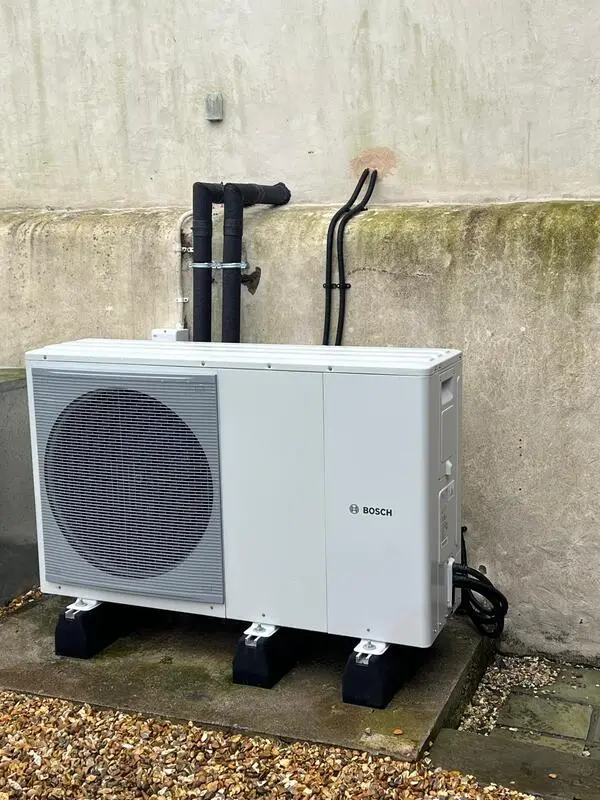
An air source heat pump (ASHP) extracts heat from the outside air — even in temperatures as low as -15°C — and uses it to heat your home and hot water. It works like a refrigerator in reverse: absorbing heat from the air, compressing it to increase the temperature, and transferring it to your central heating system.
Air source heat pumps are one of the most efficient renewable heating technologies available. For every 1kW of electricity used to power the pump, you get 3–4kW of heat output. This means your heating costs can be reduced by up to 50% compared to a traditional gas boiler, while significantly lowering your carbon emissions.
ASHPs are suitable for a wide range of properties, from detached houses to semi-detached and terraced homes, provided there is sufficient outdoor space for the external unit. They work with radiators, underfloor heating, and hot water cylinders. Properties with good insulation levels get the best results.
The UK government's Boiler Upgrade Scheme (BUS) offers grants of up to £7,500 towards the cost of installing an air source heat pump. We guide you through the application process and handle all the technical requirements to ensure your installation qualifies.
Why Gas Boilers Are Becoming a Problem
Gas prices have increased significantly in recent years, and this trend is unlikely to reverse. Homeowners relying entirely on gas for heating are exposed to volatile energy markets with no control over annual cost increases. An air source heat pump provides a hedge against rising gas prices by using electricity — which can also be generated from solar panels.
The UK government has committed to net-zero carbon emissions by 2050. As part of this, new-build homes from 2025 onwards will no longer have gas boilers installed. While existing homes are not yet required to switch, future legislation may restrict gas boiler installations or impose carbon levies. Installing a heat pump now positions your property ahead of regulatory changes.
Gas boilers also have a shorter lifespan (10–15 years) compared to air source heat pumps (20–25 years). Combined with annual servicing costs, repair frequency, and declining efficiency, the total cost of ownership for a gas boiler over 20 years often exceeds that of a heat pump — especially when government grants are factored in.
Many homeowners delay switching because they assume heat pumps do not work in the UK climate. This is a misconception. Modern ASHPs are designed for northern European conditions and operate efficiently in temperatures well below freezing. Scandinavian countries — with harsher winters than Wales — have adopted heat pumps as their primary heating technology.
Our Process
How It Works
Home Energy Assessment
We survey your property, assess insulation levels, calculate heat loss, and determine the correct heat pump size and type for your home.
System Design
We design the complete system including the heat pump unit, hot water cylinder, pipework routes, radiator upgrades (if needed), and control system.
Grant Application
We help you apply for the Boiler Upgrade Scheme grant (up to £7,500) and handle all MCS certification requirements.
Installation
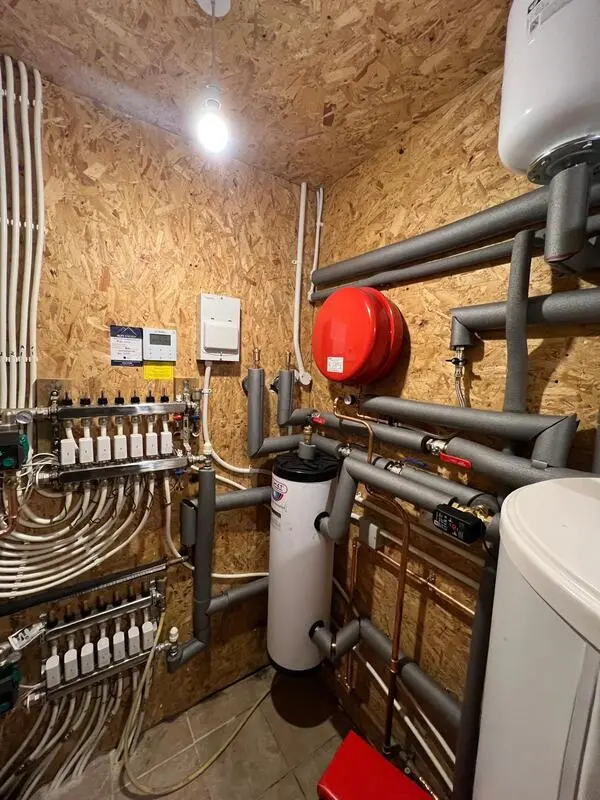
We install the external heat pump unit, hot water cylinder, new controls, and connect everything to your existing or upgraded heating distribution system.
Commissioning & Handover
We commission the system, optimise settings for your property, register your warranty, and walk you through the controls so you get maximum efficiency from day one.
Benefits
Why This Matters
Up to 50% Lower Bills
Heat pumps deliver 3–4kW of heat for every 1kW of electricity used. Combined with off-peak tariffs or solar, savings are substantial.
Zero Carbon Heating
No gas combustion means no direct carbon emissions from your home. A heat pump reduces your heating carbon footprint by up to 70%.
25-Year Lifespan
Air source heat pumps last 20–25 years — significantly longer than gas boilers. Lower maintenance costs and fewer breakdowns.
Government Grant Available
The Boiler Upgrade Scheme offers up to £7,500 towards installation costs. We handle the entire application process for you.
Works in UK Climate
Modern ASHPs operate efficiently down to -15°C. Designed for northern European conditions, they perform reliably through Welsh winters.
Future-Proof Your Home
With gas boilers being phased out of new builds, a heat pump increases your property value and prepares you for future regulations.
Air Source Heat Pump Technical Details
There are two main types of air source heat pump: air-to-water and air-to-air. Air-to-water systems are the most common for UK homes as they connect to your existing wet central heating system (radiators and/or underfloor heating) and also heat your domestic hot water via an insulated cylinder. Air-to-air systems provide space heating only and do not produce hot water.
The efficiency of a heat pump is measured by its Coefficient of Performance (COP). A COP of 3.0 means the system produces 3kW of heat for every 1kW of electricity consumed. In real-world conditions, seasonal COPs (SCOP) of 2.8–3.5 are typical for well-designed UK installations. This makes heat pumps approximately three times more efficient than a gas boiler.
System sizing is critical. An undersized heat pump will struggle to heat your home, while an oversized unit will short-cycle and waste energy. We carry out detailed heat loss calculations based on your property's dimensions, insulation levels, glazing, orientation, and ventilation rates. This ensures the heat pump is matched precisely to your home's heating demand.
Heat pumps operate most efficiently at lower flow temperatures (35–45°C) compared to gas boilers (60–80°C). This means larger radiators or underfloor heating deliver the best results. In many homes, existing radiators are already oversized enough to work effectively. Where they are not, we recommend targeted upgrades rather than replacing every radiator.
The external unit requires adequate clearance for airflow — typically 300mm from walls and 1 metre of clear space in front. It produces a low-level hum similar to an air conditioning unit. Modern heat pumps operate at around 40–50 decibels, which is equivalent to a quiet conversation. Planning permission is not usually required for domestic installations under permitted development rights.
We install leading brands including Daikin, Mitsubishi, Vaillant, and Samsung. Each brand offers different features, noise levels, and efficiency ratings. We recommend the best option based on your property size, budget, and performance requirements. All installations are MCS certified, which is required for government grant eligibility.
FAQ