
Underfloor HeatingInstallation in Barry &South Wales
Transform the way your home heats with a professionally installed wet underfloor heating system. Even warmth across every room, lower running costs than radiators, and no wall space wasted. Designed and installed by qualified heating engineers.
9+ years established · Compatible with boilers & heat pumps · Full system design
9+
Years Experience
25%
More Efficient
50yr
Pipe Lifespan
Full
System Design
All
Floor Types
What Is Wet Underfloor Heating?
Wet underfloor heating (UFH) uses warm water flowing through pipes embedded in or beneath your floor to heat the room from the ground up. Unlike radiators, which create convection currents that heat the air unevenly, underfloor heating radiates warmth evenly across the entire floor surface — creating consistent, comfortable temperatures at occupant level.
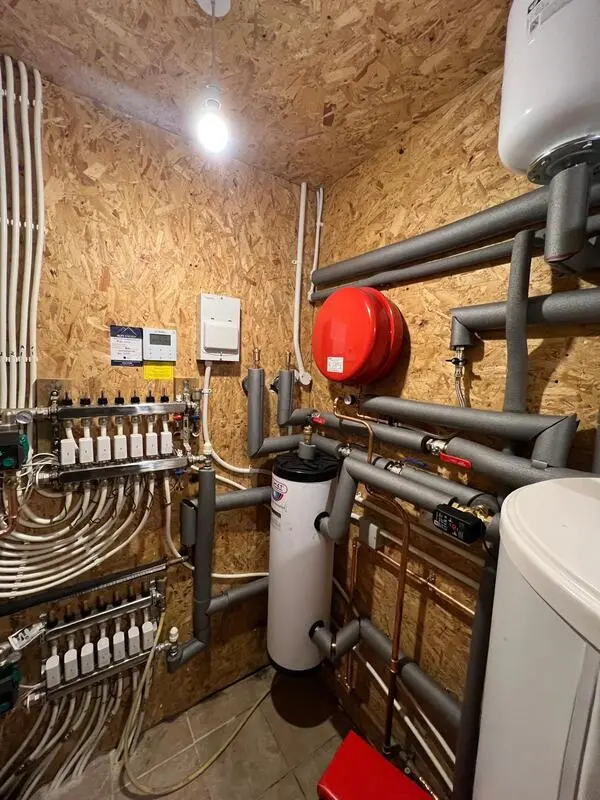
The system connects to your existing boiler or an air source heat pump via a manifold that controls the flow of warm water to each zone. Because underfloor heating operates at lower water temperatures (35–45°C vs 60–80°C for radiators), it is inherently more energy efficient and pairs perfectly with heat pumps and condensing boilers.
Underfloor heating is ideal for new builds, extensions, ground-floor renovations, conservatories, and bathroom or kitchen refits. It works with screed, timber, tile, stone, and engineered wood flooring. We design each system individually based on room dimensions, floor construction, insulation levels, and heat loss calculations.
Beyond comfort and efficiency, underfloor heating eliminates the need for radiators — freeing up valuable wall space for furniture and giving your rooms a cleaner, more modern aesthetic.
Why Radiators Are Not Always the Best Option
Radiators heat air unevenly. Hot air rises from the radiator to the ceiling, circulates, and cools as it descends on the opposite side of the room. This creates temperature stratification — warm at head height, cool at floor level. You end up heating the ceiling while your feet stay cold, which is both uncomfortable and wasteful.
Radiators also occupy wall space that could be used for furniture, shelving, or design features. In smaller rooms, radiator placement significantly limits layout options. This is particularly frustrating in kitchens, bathrooms, and open-plan living areas where every square metre counts.
Traditional radiators need to run at 60–80°C to produce adequate heat. This high flow temperature reduces boiler efficiency and is incompatible with heat pump systems, which operate best at 35–45°C. If you plan to install an air source heat pump in the future, underfloor heating makes the transition far more effective.
Many homeowners assume underfloor heating is a luxury reserved for expensive new builds. In reality, modern low-profile systems can be retrofitted into existing properties with as little as 15mm of additional floor height — making them accessible for renovations and refurbishments at a reasonable cost.
Our Process
How It Works
Site Survey & Heat Loss Calculation
We survey your property, calculate heat loss for each room, and determine the correct pipe layout, spacing, and manifold configuration.
System Design
We produce a detailed design showing pipe routes, manifold location, zone controls, and integration with your existing or new heat source.
Floor Preparation
We prepare the subfloor, lay insulation boards to prevent downward heat loss, and install edge insulation strips around the perimeter.
Pipe Installation
We lay the heating pipes in the calculated pattern — typically at 150–200mm spacing — and secure them to the insulation boards. Pipes are pressure-tested before screeding.
Manifold & Controls
We install the manifold, connect each zone, fit mixing valves (if needed for boiler compatibility), and install thermostats for individual room control.
Commissioning
Once the screed or floor covering is laid, we commission the system gradually, set flow temperatures, and configure the zone controls for optimal performance.
Benefits
Why This Matters
25% More Efficient
Lower flow temperatures mean your boiler or heat pump runs more efficiently, reducing energy consumption and gas or electricity bills.
Lower Running Costs
Underfloor heating costs less to run than radiators because it operates at lower temperatures while delivering better comfort.
Even, Comfortable Warmth
Heat rises evenly from the floor, eliminating cold spots and creating consistent temperatures at the level where you actually feel them.
50-Year Pipe Lifespan
Modern PEX and PE-RT pipes used in underfloor heating systems have a rated lifespan of 50+ years with virtually no maintenance.
Frees Up Wall Space
No radiators means more room for furniture, design features, and clean wall lines throughout your home.
Heat Pump Compatible
Underfloor heating is the ideal partner for air source heat pumps — maximising efficiency and preparing your home for renewable heating.
Underfloor Heating Systems in Detail
We install wet underfloor heating using high-quality PEX or PE-RT pipes rated for at least 50 years of continuous use. These pipes are flexible, corrosion-resistant, and designed specifically for hydronic heating applications. We do not install electric underfloor heating mats — wet systems are significantly more energy efficient and cost-effective for whole-room heating.
For new builds and extensions where screed floors are being laid, we install pipes directly onto insulation boards and cover them with a liquid screed (typically 50–75mm deep). The screed acts as a thermal mass, absorbing and slowly releasing heat for consistent temperatures throughout the day.
For renovation projects where floor height is limited, we use low-profile systems that sit within pre-grooved insulation panels. These systems require as little as 15–20mm of additional floor height and can be covered with self-levelling compound before fitting your chosen floor finish.
Each room or zone is controlled independently via a manifold — a central distribution point that sends warm water to each circuit and allows individual temperature adjustment. Manifolds are typically located in a utility room, under-stairs cupboard, or airing cupboard where they are accessible but out of sight.
Floor finishes have different thermal conductivities. Stone, tile, and porcelain are the most efficient — they transfer heat quickly and retain it well. Engineered wood and laminate are also compatible with underfloor heating, provided the total tog value (including underlay) does not exceed 1.5. Carpet over underfloor heating is possible but less efficient — we recommend a maximum tog value of 1.0.
We design every system using industry-standard heat loss calculations and CAD-based pipe layout drawings. This ensures correct pipe spacing (typically 150mm in bathrooms and 200mm in living areas), adequate flow rates, and even heat distribution. We also install mixing valves where the heat source operates at a higher temperature than the underfloor system requires.
FAQ